 News
News Media About Us
 Useful Articles
 Promotions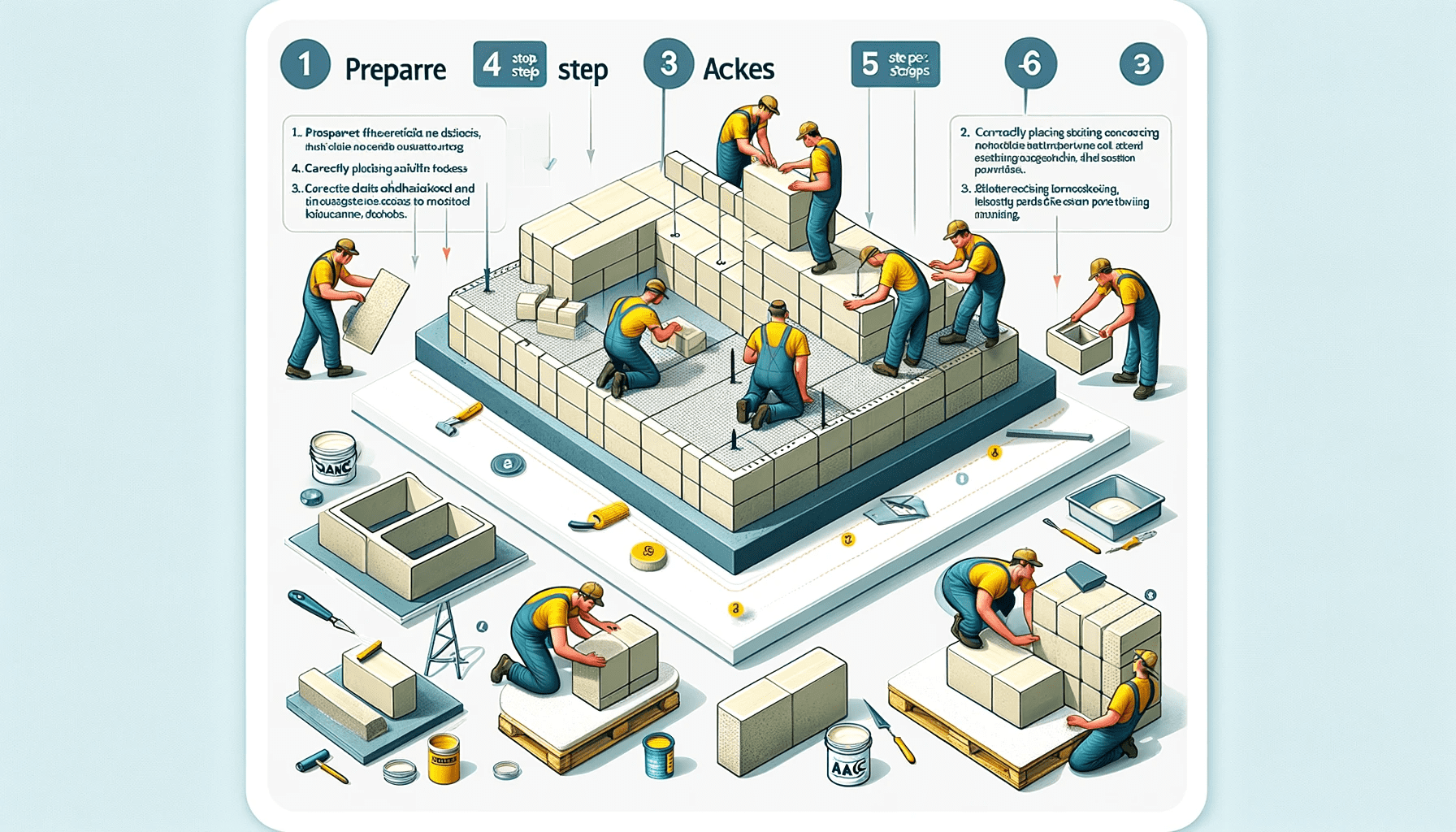
When constructing a building from aerated concrete blocks, the correct choice of materials and mortars for masonry plays a key role. In this text we will look at how aerated concrete is laid, what materials are best suited for this process, and answer common questions about glue and mortar selection.
Materials and mortars for laying aerated concrete
This article offers answers to the most common questions users have. We hope this format will allow you to quickly and easily find the information you are interested in.
How to lay aerated concrete: glue or mortar
When choosing between glue and mortar for aerated blocks, you should take into account the specific conditions of the construction site. Glue provides faster and easier laying, especially when time is limited. However, using cement mortar provides a stronger bond, which can be important in the case of high loads.
How to lay aerated blocks correctly
Proper laying begins with surface preparation. Clean the blocks of dust and dirt, then apply adhesive or mortar, taking into account the manufacturer's recommendations. When laying, it is necessary to ensure proper alignment and horizontality of the blocks.
What to lay aerated concrete blocks on
The use of specialized glue is the most preferable option, as it provides a reliable bond. The consumption of glue depends on the method of laying, the size of the blocks and their density. If mortar is chosen, it is recommended to use mineral mortars with the addition of polymers to improve adhesion.
How is the laying of aerated concrete on foam
When using foam, it is important to take into account its properties and follow the recommendations for use. Foam can be used as an insulator and additional fastening of blocks.
Is it possible to lay aerated concrete on cement mortar
Aerated concrete can be laid on cement mortar. However, it should be taken into account that such a connection may be less strong than when using a specialized adhesive.
Choosing the right materials and mortars for aerated concrete masonry plays a key role in ensuring a secure and strong bond. Priority should be given to specialized adhesives that guarantee efficient laying and durability of the structure.
Useful Tips for Correctly Laying Aerated Concrete Blocks
-
Thorough preparation and waterproofing of the base: Before laying the first row, it is necessary to perfectly level the plinth or foundation part with mortar and be sure to lay a layer of rolled waterproofing. The geometry and durability of the entire subsequent building depend on the smoothness and dryness of the starting row.
-
Using special adhesive instead of a thick layer of cement: For laying autoclaved aerated concrete, it is recommended to use specialized thin-layer adhesive mixtures. The joint thickness should be only 2–3 mm, which completely eliminates "cold bridges" through which heat escapes from the premises.
-
Constant control of level and verticality: During the work, regularly check the horizontality of each row using a building level and a mooring cord. Any, even minor deviation at the initial stages can lead to wall skewing and increased consumption of finishing materials.
-
Mandatory reinforcement of the masonry: To prevent the appearance of shrinkage cracks, reinforce every fourth row of blocks with reinforcement bars or mesh, as well as the zones under window openings and the support platforms of lintels. The reinforcement is laid into pre-cut grooves and embedded with mortar or adhesive.
-
Protecting blocks from atmospheric precipitation during construction: Aerated concrete is hygroscopic and actively absorbs moisture when staying under open rain for a long time. If the building shell is left to winter over or the exterior finishing process is delayed, be sure to cover the walls with waterproof tarps to avoid over-moisturizing the material.


